
Roof Installation
New Roof Installation in Lakewood, CO
Roof installation in Lakewood, CO starts with what is already on the house. Most Lakewood homes were built around 1977, so a new roof here is usually the second or third roof on a 1970s deck, and under Lakewood's 2021 building code the old covering comes off to the deck, with no overlay allowed. Roof Authority LLC installs architectural shingle and standing-seam metal systems across Lakewood, pulls the City permit before tear-off, and prices every job by measured roof area in squares, not living area. Call (720) 817-3348 to talk through your roof.
Service overview
What a new roof installation involves in Lakewood
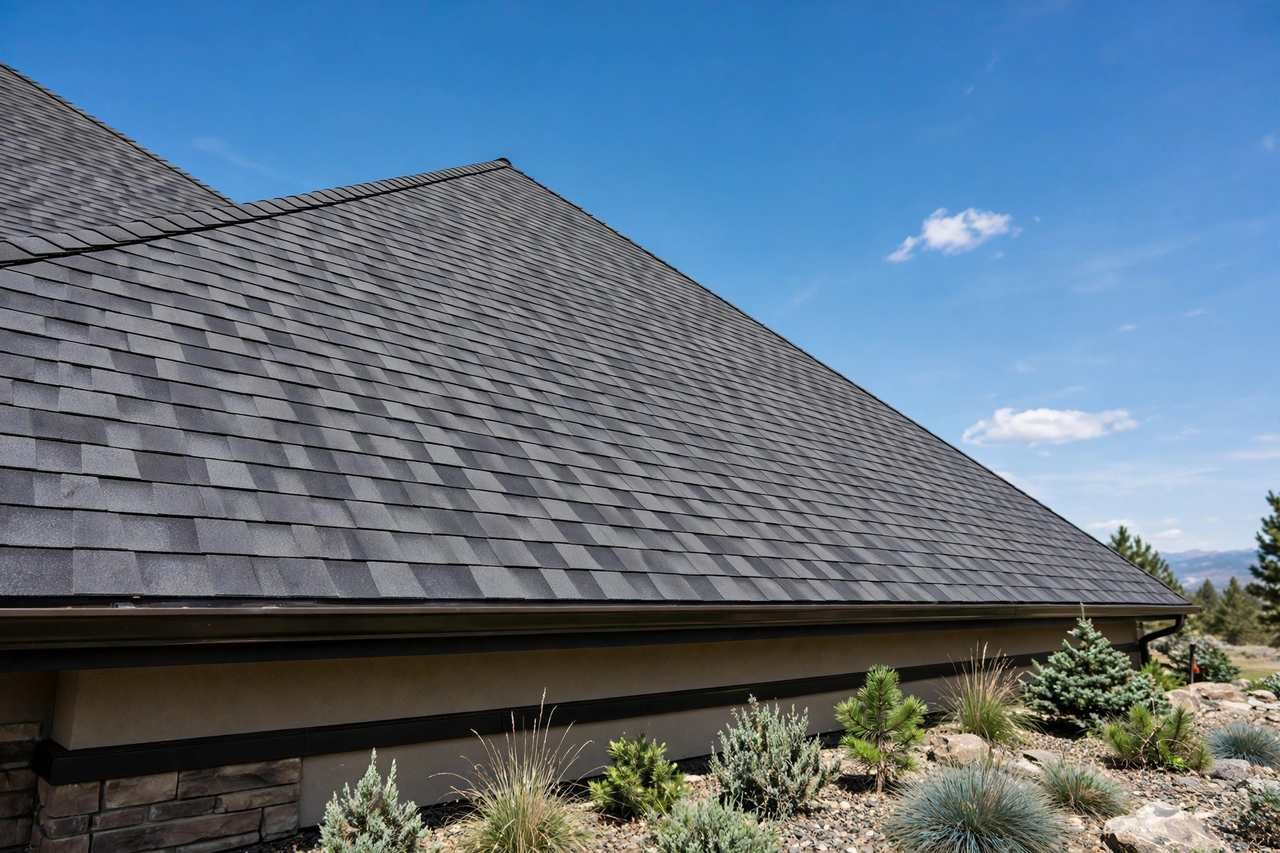
A new roof installation in Lakewood is a full system replacement, not a shingle swap. The crew strips the old covering to the deck, replaces damaged sheathing, then builds back up: synthetic underlayment, self-adhering membrane at the eaves, valleys and penetrations, drip edge, flashing, shingles, ridge vent and pipe boots. Every layer matters in this climate, where May hail, summer sun at 5,500 feet and winter freeze-thaw all work on the same roof.
Two Lakewood facts shape every installation. First, the City adopted the 2021 International Building and Residential Codes, and its roofing handout requires tear-off to the deck: one layer only, Class A covering citywide, with a permit in hand before tear-off on any re-roof. The flat re-roof fee for a single-family or duplex home is $110 under City Resolution R-2020-48; verify the current fee with the City when you plan, since fees change. Second, the house itself: with a median build year of 1977 and 40.2% of Lakewood homes built between 1960 and 1979, the deck underneath is often spaced boards or older plywood that needs patching before new shingles go down. For the money side, see our roof replacement cost guide for Lakewood homeowners, which lays out published Denver-metro market ranges.
Practical benefits
What a full installation gives you
A tear-off costs more than a patch because it solves problems a patch cannot reach. Here is what the work actually buys.
A deck you can see before you commit
Stripping to the deck exposes rot, soft sheathing and old flashing failures that no surface inspection can confirm. Damaged plywood gets replaced, spaced boards get overlaid with plywood or OSB, and the new roof starts on solid wood instead of on top of a problem.
Class 4 hail resistance where it counts
Class 4 impact-resistant shingles are tested to UL 2218 with a 2-inch steel ball dropped from 20 feet, and they are the sensible upgrade in a hail city. They are not hail-proof: baseball-size hail (NOAA records the largest Lakewood hail that day at 2.00 inches; the county maximum was 2.75 inches at Edgewater) can still damage Class 4 shingles, flashing, vents and gutters. Some carriers offer a premium reduction for Class 4 roofs; that varies by carrier and policy and is never guaranteed.
Ventilation that fights ice dams
A balanced system of soffit intake and ridge exhaust keeps the deck uniformly cold, which is how you stop ice dams in a snow climate. Note that an ice barrier is not required by Lakewood code, since the January mean is about 32 to 33 degrees, but ice dams still happen here, so self-adhering membrane at the eaves and valleys is best practice on every install.
Paperwork the City and your insurer can follow
The permit goes in through the City's eTRAKiT system before tear-off, and asphalt shingle finals can use photo inspection. After hail, the same photo and measurement record supports an insurance claim. Under Colorado law SB 12-038, a roofer may document damage and meet the adjuster, but may not pay, waive or rebate any part of your deductible.
How service works
How a roof installation runs here
Five steps, in order, with the permit before the tear-off and the inspection after the install.
STEP 01
Roof and attic walk
We walk the roof, look at the deck from the attic side where we can get in, and photograph every problem area. You get a written scope with measurements in squares and material options. If a repair will honestly buy you three more years, we say so instead of pushing a full tear-off.
Tools and methods
Tools and methods we use on installs
Roofing nail gun
Drives shingle nails to the correct depth and pattern so fasteners hold in wind. Set too deep and the shingle tears; too shallow and it lifts.
Chalk line
Snaps straight reference lines across the deck so every shingle course runs true. Crooked courses are visible from the street.
Pry bar and roofing hammer
Strips old shingles and flashing without damaging the decking underneath. The right pry bar saves sheathing on multi-layer tear-offs.
Safety harness and ladder stabilizer
Keeps the crew safe on steep pitches and keeps ladders from slipping on gutters. Fall protection is part of every steep-slope day.
Caulking gun
Applies sealant at flashing details, pipe boots and ridge caps. The right sealant and the right bead prevent the small leaks that turn into big ones.
Leaf blower
Clears granules, debris and dust from the roof, gutters and yard at the end of each workday. Cleanup is part of the job, not an afterthought.
Magnet sweeper
Rolls the yard, driveway and planting beds for stray nails after tear-off and again after install. Two passes, not one.
Tape measure and square count
Measures the roof in squares, which is how roofing is priced and ordered. Living area is not roof area, and the difference matters on the estimate.
Hook blade and utility knife
Cuts shingles, underlayment and membrane cleanly at valleys, rakes and penetrations, where a ragged cut becomes a leak path.
Camera and photo record
Every problem area gets photographed before, during and after the work, so you can see the deck repair and the flashing detail without climbing a ladder.
Where this service fits
When a new roof is the right call
Your 1970s roof is shedding granules
Lakewood's median home was built in 1977, so many roofs here are on their second or third cycle. When granules fill the gutters after every rain and the shingles look bare, the mat is exposed to UV and the roof is near the end of its service life. An inspection gives you an honest read on remaining life.
Hail just hit and neighbours are re-roofing
After a hail event, we inspect for bruising and granule loss, document it with photos and measurements, and prepare a written scope for your adjuster. If the claim is approved, we schedule the install and handle the permit. We meet the adjuster on site; we do not negotiate the claim.
You are buying or selling and the inspection flagged the roof
We do a full inspection with a written report on remaining life, then quote a replacement if needed. For sellers, scheduling the install before closing gives the buyer a documented new roof and a clean inspection record.
A low-slope section needs a new surface
Garage and addition roofs with a low slope do not take shingles well. Those sections get a membrane system, and our flat roof installation page covers how TPO and EPDM are priced and installed on Lakewood homes.
Local execution
How installation differs across Lakewood
Lakewood is not one roof market. A 1970s ranch on a flat lot, a terraced home on Green Mountain and a townhome in Belmar Park each put different demands on a new roof, and the permit office that governs the work can change with the parcel. These are the local details that shape an installation here.
A new roof is shaped by the neighbourhood it sits in — 1970s decks, foothills wind, and shared roofs all change the scope. See our locations page for the area details.
Problems we solve
Roof problems a new installation solves
Most roofs we replace were failing for years before anyone noticed. Here are the problems we see most often on Lakewood roofs, and what happens if you let them ride.
Granule loss after hail
Hail bruises shingles and knocks granules loose, exposing the asphalt mat to UV. Once granules are gone the shingle dries out and cracks within a season or two, and it cannot be restored. A new Class 4 roof is the answer when the damage is widespread.
A deck hidden under old roofs
Lakewood now requires tear-off to the deck, so a replacement is the moment hidden rot finally gets found and fixed. Soft decking cannot hold nails, so shingles lift in the next wind event. Left alone, rot spreads from sheathing into framing.
Rot around chimneys and valleys
We tear off to the deck, replace every rotten sheet, and rebuild the flashing detail correctly, with a cricket on the high side of any chimney or penetration wider than 30 inches. Rot caught during a tear-off costs far less than rebuilding framing later.
A roof installed without a permit
Unpermitted work causes problems at resale and with insurers, and it skips the inspection that confirms the install meets code. We pull the permit before tear-off and meet the inspector, because the permit is public record and the next buyer will look.
Need help?(720) 817-3348
A practical standard for every visit.
Clear planningPrepared arrivalsCareful workLocal follow-through
Experience in the details
A Lakewood roofer you can check
Roof Authority LLC is based at 200 Union Blvd in Lakewood, owned by Keith Merritt, and in business since 2021. The company is BBB Accredited since October 2021 with an A+ rating and no complaints in the last three years, according to BBB. Colorado issues no state roofing licence; the Lakewood credential is a City contractor registration, Class 5h for Roofing and Waterproofing. Ask any roofer you consider which registration they hold and in which jurisdiction, and check the permit they pull, because the permit is public record.
- BBB Accredited since October 2021, rating A+, with no complaints in the last three years, according to BBB.
- In business since 2021. Owner Keith Merritt, based at 200 Union Blvd, Lakewood, CO 80228.
- City of Lakewood contractor registration, Class 5h (Roofing and Waterproofing), the credential Lakewood requires. Colorado issues no state roofing licence.
- Permits filed through the City eTRAKiT system before tear-off, with a final inspection scheduled after install.
- Phone-only contact at (720) 817-3348, Monday to Saturday 7:00 AM to 5:00 PM, Sunday closed.
Where we work
One local team. A lot of ground covered.
Notes from local customers
What Lakewood Homeowners Say
Roof Authority, LLC (Keith Merritt) has done numerous roofing jobs for our family. I first met him over 15 years ago when he presented himself with integrity & enthusiasm while replacing a roof for my mother. That job was flawless, was done under budget and took less time than expected. It is because of that first experience that I have used Keith's expertise over and over again since. Following a bad hail storm in 2021, after 2 other roofers presented fancy quotes, Keith came, inspected our roof and said he'd make it happen with our insurance claim. He walked through the process with us, was there to do the heavy lifting and was onsite to supervise the roofers as they worked. While the roof was being replaced, Keith noticed a few other issues with our home that he'd forgotten to mention in his estimate, and took care of them without any additional charges. Keith and his crew are polite and modest and really do a job that lasts!
Keith recently re-roofed our house and did a really great job. The price was fair and I would recommend him to anyone. He personally supervised the work and kept the site very clean.
Keith and his crew are top notch, they replaced our roof quickly and the work looks great. Keith is honest and great to deal with. Highly recommend!
Published Denver-metro market ranges from October and November 2026 put architectural shingle replacement at about $4.50 to $8.50 per square foot installed, with a typical home running about $9,000 to $18,000. Those are market ranges, not this company's prices, and every roof is priced by measured roof area in squares, not living area. Pitch, layers, decking and penetrations move the number.
Yes. Lakewood requires a permit before tear-off on any re-roof, filed electronically through the City eTRAKiT system. The flat re-roof fee for a single-family or duplex home is $110 under City Resolution R-2020-48, and all other structures $255 under the same resolution; verify the current fee with the City before you plan around it. A final inspection follows installation, and asphalt shingle finals can use photo inspection through eTRAKiT.
No. Under Colorado law SB 12-038, a roofer paid from insurance proceeds may not advertise or promise to pay, waive or rebate any part of your deductible. A contractor who offers to cover it is breaking the law and putting your claim at risk. A roofer may document damage, prepare a scope, meet the adjuster on site and submit a supplement for missed code-required items.
It depends on material, hail exposure and ventilation. Front Range market guides cite roughly 13 to 17 years for architectural shingles under Lakewood hail, UV and freeze-thaw; that is a market-guide figure, not a manufacturer promise. Class 4 impact-resistant shingles hold up better to hail but are not hail-proof: baseball-size hail (NOAA records the largest Lakewood hail that day at 2.00 inches; the county maximum was 2.75 inches at Edgewater) can damage Class 4 shingles, flashing, vents and gutters too.
Keep exploring
Related Services
Your next step is waiting
Talk through your new roof with a Lakewood roofer
Call (720) 817-3348, Monday to Saturday 7:00 AM to 5:00 PM. We will walk the roof, measure it in squares, and give you a written scope with material options, plus an honest read on whether a repair will buy you more time.
Start with the basics
Contact Roof Authority LLC
Have a roof at the end of its life, or one that took hail damage? Call Roof Authority LLC at (720) 817-3348. We are at 200 Union Blvd, Lakewood, CO 80228, and we answer the phone Monday to Saturday, 7:00 AM to 5:00 PM. Sunday we are closed.