
Your local team · Eiber
Roofing in Eiber, Lakewood, CO: Wartime Homes, Gulch-Side Roofs
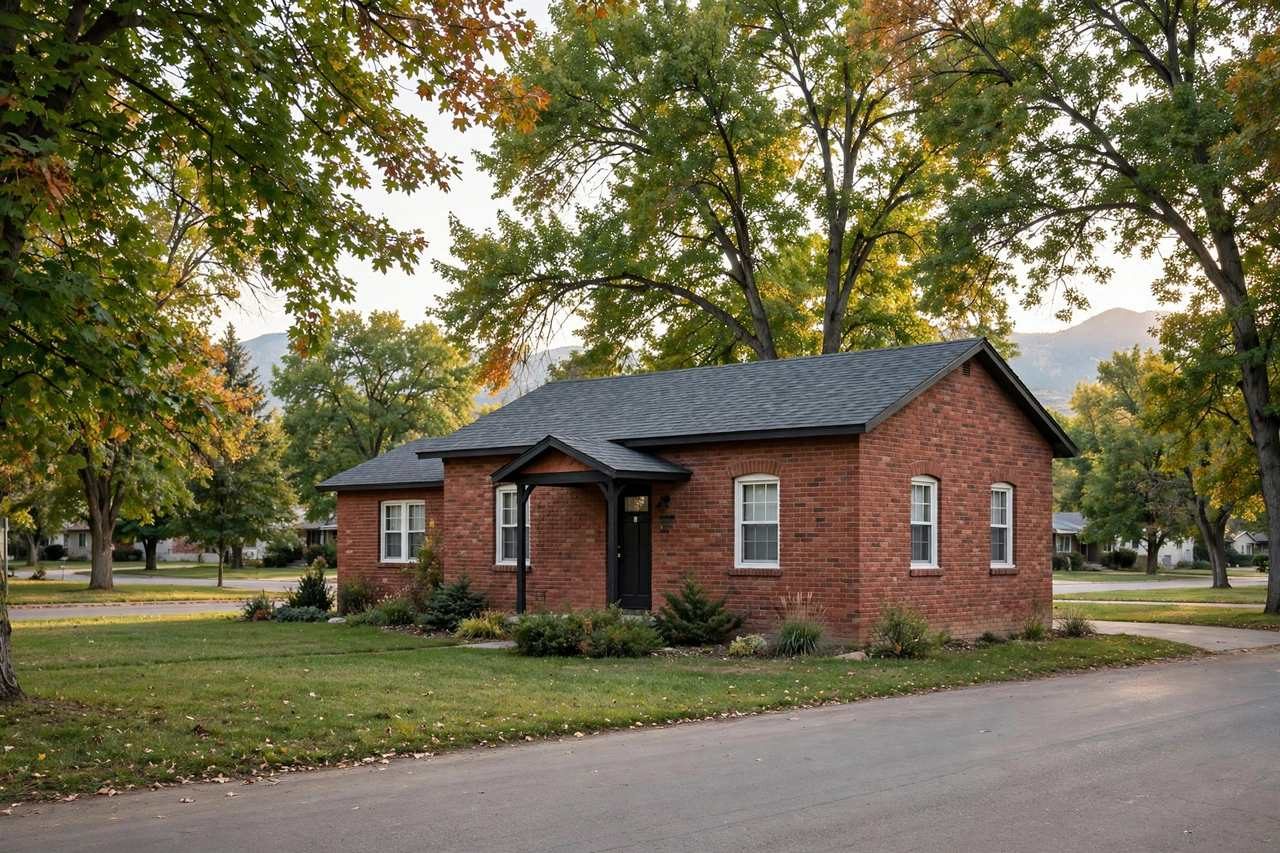
Roofing in Eiber starts with the house's birth decade. Most of the neighbourhood went up in the 1940s — 145 homes, 55% of them in the war years — as worker housing for the Denver Ordnance Plant, and the roofs today are the second or third on those 1940s decks. Lakewood Gulch and Dry Gulch cut through the streets. Call (720) 817-3348.
Local knowledge
Roofing in Eiber: Date the Structure, Not Just the Roof
Roof Authority LLC works Eiber's roofs with the neighbourhood's history in mind. The 2018 cultural resource survey counted 93 homes from the 1930s and 145 from the 1940s — 55% of them built in the war years as Denver Ordnance Plant worker housing — mostly brick ranches with tall cottonwoods and evergreens, plus surviving Queen Anne Victorians, colonial revivals and Tudors. Orchard sheds and poultry houses were converted to dwellings in the 1940s and 1950s, and a 1970s apartment boom doubled the population. Lakewood Gulch and Dry Gulch cut through the streets, with historic irrigation ditches alongside. No property was identified as listed in the survey and no historic roofing restriction was found; roof material is unpublished as an inventory. Call (720) 817-3348 and we will start by dating the structure, not just the roof.
Services available in Eiber
Roofing Services Available in Eiber CO
Eiber homeowners call us for everything from a single missing shingle to a full tear-off. The work splits by structure: 1940s wartime ranches, steep Victorian and Tudor survivors, and converted outbuildings that were never built as houses. Gulch-side drainage shapes the rest.
01
Roof Installation
New roofs in Eiber are built to the 2021 codes: tear-off to deck, solid sheathing, drip edge at eaves and rakes, starter course, and Class A covering citywide. On steep Victorian and Tudor survivors, complex rooflines take more flashing and more time than the ranch next door.
View service02Roof Replacement
Most Eiber replacements are full tear-offs, not overlays — Lakewood allows one layer only. We strip the old covering to the deck, replace damaged plywood, and install the new system with new flashing — on Eiber's steep Victorians and converted outbuildings, the flashing work is where the time goes. The permit is filed through eTRAKiT before tear-off.
View service03Roof Repair
Repair in Eiber usually traces back to hail bruising, wind-lifted shingles, or flashing failure at chimneys, skylights and house-to-outbuilding joints. We trace the leak to its actual entry point — on Eiber's converted outbuildings, the house-to-outbuilding joints are the usual suspect — instead of patching the ceiling stain. Repairs of 100 square feet or more need a City permit first.
View service04Roof Inspection
An inspection in Eiber checks for granule loss, hail bruising, cracked pipe boots and ice-dam risk, with photos of everything we find. On a 1940s deck that has been nailed into for 80 years, the deck itself deserves as much attention as the shingles.
View service05Roof Maintenance
Eiber's tall cottonwoods and evergreens drop debris into valleys, and the gulches add their share. Our maintenance visits clear valleys under Eiber's cottonwoods and evergreens, check flashing, reseal pipe boots and clear gutters before winter. Ice dams still happen here even though no ice barrier is code-required.
View service06Emergency Roof Repair
When a storm opens your roof, call (720) 817-3348 during business hours, Monday to Saturday, 7:00 AM to 5:00 PM. We help protect the roof from further water entry and plan the permanent repair. We do not promise overnight service.
View serviceStart with the decade
How Roofing Work Gets Done in Eiber
Roofing work in Eiber starts with the house's age, not its roof's age. A 1940s wartime ranch and a converted poultry house are different jobs that happen to share a street.
Date the structure.
Date the structure. The 2018 survey counted 145 homes built in the 1940s, 55% in the war years. Structure vintage decides what the deck, framing and ventilation are likely to be — the roof's own age is a separate question.
Hail, documented slope by slope.
Hail, documented slope by slope. We walk every slope after a storm and photograph bruising. On brick ranches and steep Victorian survivors alike, damage hides from the driveway.
Converted structures need a closer look.
Converted structures need a closer look. Orchard sheds and poultry houses converted to dwellings in the 1940s–50s were not built as houses. We check low-slope outbuilding roofs and house-to-outbuilding flashing before quoting.
Permit before tear-off.
Permit before tear-off. In the City, the permit goes through eTRAKiT before tear-off on any re-roof or repair of 100 square feet or more. The flat re-roof fee is $110 for a single-family or duplex home — confirm the current fee with the City.
Gulch drainage and cleanup.
Gulch drainage and cleanup. Lakewood Gulch and Dry Gulch run through Eiber. We check valley drainage, clear debris and finish with a full cleanup and final walkthrough.
Common local problems
Common Roofing Problems in Eiber
Wartime roofs on their second or third cycle
145 homes went up in the 1940s, 55% in the war years. A 1940s deck has been nailed into for 80 years; tear-off reveals what overlays hid.
Converted outbuilding roofs
Orchard sheds and poultry houses converted to dwellings in the 1940s and 1950s were not built as houses. Low-slope outbuilding roofs and house-to-outbuilding flashing need a specialist look.
Gulch and ditch drainage
Lakewood Gulch, Dry Gulch and historic irrigation ditches bisect Eiber. Valley drainage and debris matter more here than on a flat grid.
Steep Victorian and Tudor survivors
A few steep, complex Queen Anne, colonial revival and Tudor roofs survive among the low ranches. They need different flashing and access than the ranch next door.
Warning signs
Signs You Need a Roofer in Eiber
Granule loss means the shingle is ageing or has been damaged by hail.
Granule loss means the shingle is ageing or has been damaged by hail. On Eiber's wartime roofs, a steady accumulation after rain is a sign to get the roof inspected.
Leaks at converted-outbuilding flashing are easy to miss.
Leaks at converted-outbuilding flashing are easy to miss. Orchard sheds and poultry houses converted to dwellings in the 1940s–50s have joints a standard ranch never has — check them first.
Wind lifts shingles at edges and ridges, breaking the seal.
Wind lifts shingles at edges and ridges, breaking the seal. Eiber's gulch-side roofs catch gusts the flat streets below never feel. Once the seal is broken, the next rain can drive water underneath — a missing shingle is an urgent repair, not a wait-and-see.
Ceiling stains near gulch-side valleys mean water is already inside.
Ceiling stains near gulch-side valleys mean water is already inside. The entry point is often not directly above the stain, because water travels along decking and rafters.
Ice dams happen when heat escapes through the roof and melts snow, which refreezes at the cold eaves.
Ice dams happen when heat escapes through the roof and melts snow, which refreezes at the cold eaves. Water backs up under shingles and leaks inside — even though no ice barrier is code-required.
We know the route
Eiber's Roofing Landmarks: Gulches, Wartime Homes and Survivors
Eiber's streets run between Colfax, Wadsworth, 6th Ave and Oak St. What shapes its roofs is older than the streets: the wartime build, the gulches, and the farm buildings that became houses.
Lakewood Gulch and Dry Gulch
Both gulches bisect Eiber, with historic irrigation ditches alongside. Gulch-side roofs deal with more valley drainage and debris.
The 1940s wartime bulge
The 2018 survey counted 145 homes built in the 1940s — 55% of them in the war years — as Denver Ordnance Plant worker housing.
Victorian and Tudor survivors
Antique Queen Anne Victorians, colonial revivals and Tudors survive among the postwar ranches, with steep, complex roofs in a low streetscape.
Converted sheds and poultry houses
Orchard sheds and poultry houses were converted to dwellings in the 1940s–50s boom. Their roofs were not built as house roofs.
The 1970s apartment boom
Apartment building in the 1970s doubled Eiber's population. Multi-unit low-slope roofs joined the ranch streetscape.
No historic roofing restriction found
The 2018 survey assessed properties for register eligibility and identified none as listed. Check your own address at permit time — but no Eiber-wide historic roof rule was found.
Eiber service coverage
Eiber at a Glance
Eiber in brief: the tags below are the facts that shape its roofs. The map shows our base at 200 Union Blvd, Lakewood, CO 80228.
Lakewood GulchDry Gulch1940s wartime homesConverted outbuildings
Roof Authority LLC200 Union Blvd, Lakewood, CO 80228, United States, lakewood, Colorado
Before work starts
What the Code Says About An Eiber Re-roof
Eiber’s wartime ranches and converted orchard sheds were built before modern code, so the re-roof rules matter more here, not less. In the City, the permit is filed through eTRAKiT before tear-off on any re-roof or repair of 100 square feet or more; the flat fee is $110 for a single-family or duplex home under Resolution R-2020-48 — always confirm the current fee with the City — and $255 for all other structures. The covering comes off to the deck, one layer only, no overlays, T-lock shingles not approved, and every covering must be Class A under the 2021 IBC and IRC; asphalt shingles must be listed to ASTM D225 or D3462 and tested to ASTM D7158 Class G or H. No ice barrier is code-required — January averages about 32–33°F, above the IRC 25°F trigger — though ice dams still form where heat escapes; and no historic roofing restriction was found for Eiber, so a like-for-like re-roof needs no historic approval. Colorado issues no state roofing licence — the Lakewood credential is City contractor registration Class 5h. See what a roof inspection checks on a 1940s deck before the permit is filed.
Notes from local customers
What Eiber Homeowners Say on Google
Keith recently re-roofed our house and did a really great job. The price was fair and I would recommend him to anyone. He personally supervised the work and kept the site very clean.
Roof Authority, LLC (Keith Merritt) has done numerous roofing jobs for our family. I first met him over 15 years ago when he presented himself with integrity & enthusiasm while replacing a roof for my mother. That job was flawless, was done under budget and took less time than expected. It is because of that first experience that I have used Keith's expertise over and over again since. Following a bad hail storm in 2021, after 2 other roofers presented fancy quotes, Keith came, inspected our roof and said he'd make it happen with our insurance claim. He walked through the process with us, was there to do the heavy lifting and was onsite to supervise the roofers as they worked. While the roof was being replaced, Keith noticed a few other issues with our home that he'd forgotten to mention in his estimate, and took care of them without any additional charges. Keith and his crew are polite and modest and really do a job that lasts!
Great company to work with. would definitely recommend
Plan for the season
How Eiber Seasons Affect Your Roof
After hail, inspect within a week.
After hail, inspect within a week. Wartime brick ranches and converted sheds hide bruising well, and a 1940s deck rewards a close look.
Hail season runs mid-April to September, peaking May to July.
Hail season runs mid-April to September, peaking May to July. Document damage early, before the autumn replacement window.
Clear Lakewood Gulch and Dry Gulch debris from valleys and gutters after the leaves drop.
Clear Lakewood Gulch and Dry Gulch debris from valleys and gutters after the leaves drop. Gulch-side lots collect more of it.
Watch for icicles at the eaves.
Watch for icicles at the eaves. Ice dams still form here even though no ice barrier is code-required — ventilation and eave protection are the fix.
More Lakewood neighbourhoods
More Lakewood Neighbourhoods
Eiber’s wartime roofs are one neighbourhood’s story — the other six guides cover the rest of Lakewood, from Applewood’s jurisdiction trap to Green Mountain’s slope wind. Find them all on the Lakewood locations page.
Before you hire
Questions to Ask a Roofing Contractor in Eiber
Will you file the permit before tear-off?
What registration do you hold, and in which jurisdiction?
How do you document hail damage for my insurer?
What does Colorado law say about my deductible?
Was my house built in the 1940s wartime bulge, and does that change the roof?
A roofer you can check
Checking Roof Authority LLC in Eiber
Roof Authority LLC, Keith Merritt, 200 Union Blvd, Lakewood, CO 80228, is BBB Accredited with an A+ rating since October 2021 — and brings that checkable record to Eiber’s wartime ranches and converted outbuildings, where the structure’s age decides the roof’s scope.
No property in Eiber was identified as listed on the National or Colorado Register in the 2018 cultural resource survey, and no historic roofing restriction was found. A like-for-like re-roof on an ordinary Eiber home needs no historic approval — but check the designation for your own address at permit time.
Yes. Eiber sits inside the City of Lakewood, so the permit goes through eTRAKiT before tear-off on any re-roof and on any repair of 100 square feet or more. The flat fee for a single-family or duplex re-roof is $110 under Resolution R-2020-48; always confirm the current fee with the City. On Eiber's 1940s wartime ranches, the permit matters twice over: the deck underneath is often the original one, and damaged plywood has to be replaced before the new covering goes on.
No. Colorado has no state roofing licence, so there is no state number to check on an Eiber roofer. In the City of Lakewood the credential is a City contractor registration, Class 5h (Roofing & Waterproofing); across the line in unincorporated Jefferson County it is a county licence resting on a passed ICC exam. Ask any roofer which of the two they hold, and for the registration itself.
No. SB 12-038, C.R.S. sections 6-22-101 to 6-22-105, says a roofer paid from insurance proceeds must not advertise or promise to pay, waive or rebate any part of your deductible. A 2% wind/hail deductible on a typical Lakewood home is roughly $11,500 out of pocket, and an older Eiber roof is no exception — age does not move the deductible. Treat any offer to cover it as a red flag.
Architectural shingle replacement ran about $4.50 to $8.50 per square foot installed in the Denver-metro market ranges published in October and November 2026, with a typical home at about $9,000 to $18,000 — but Eiber’s 1940s roofs are priced by measured roof area in squares, not living area, and a wartime ranch, a converted orchard shed and a steep Victorian survivor on the same street are three different jobs. The 1940s deck and framing decide much of the scope. Those are published market ranges, not Roof Authority LLC prices. For an assessment of your roof in Eiber, call (720) 817-3348.
Your next step is waiting
Call Before the Next Hail Season
If your Eiber roof is leaking, storm-damaged or past its prime, call Roof Authority LLC at (720) 817-3348 — a 1940s deck and a converted outbuilding both deserve a look before anyone quotes. We answer Monday to Saturday, 7:00 AM to 5:00 PM, and are closed Sundays. Phone is our only contact channel, and we are based at 200 Union Blvd, Lakewood, CO 80228.
Start with the basics
Contact Roof Authority LLC
Have a leak, storm damage, or a roof that needs a look? Call us at (720) 817-3348. We answer the phone during business hours: Monday to Saturday, 7:00 AM to 5:00 PM; Sunday closed. Phone is our only contact channel.