
Storm Damage Roof Repair
Storm Damage Roof Repair in Lakewood, CO
Storm damage roof repair in Lakewood, CO means wind, wind-driven rain, and the hail that usually comes with them, often all three in the same storm. The strongest Lakewood wind NOAA recorded in 2015–2024 was 56 knots, about 64 mph, on 6 June 2020, and Chinook and downslope winds gust 60–100 mph along the foothills corridor. Roof Authority LLC inspects storm damage, documents it with photos and measurements, and repairs the roof at the source. Call (720) 817-3348.
Service overview
What storm damage looks like on a Lakewood roof
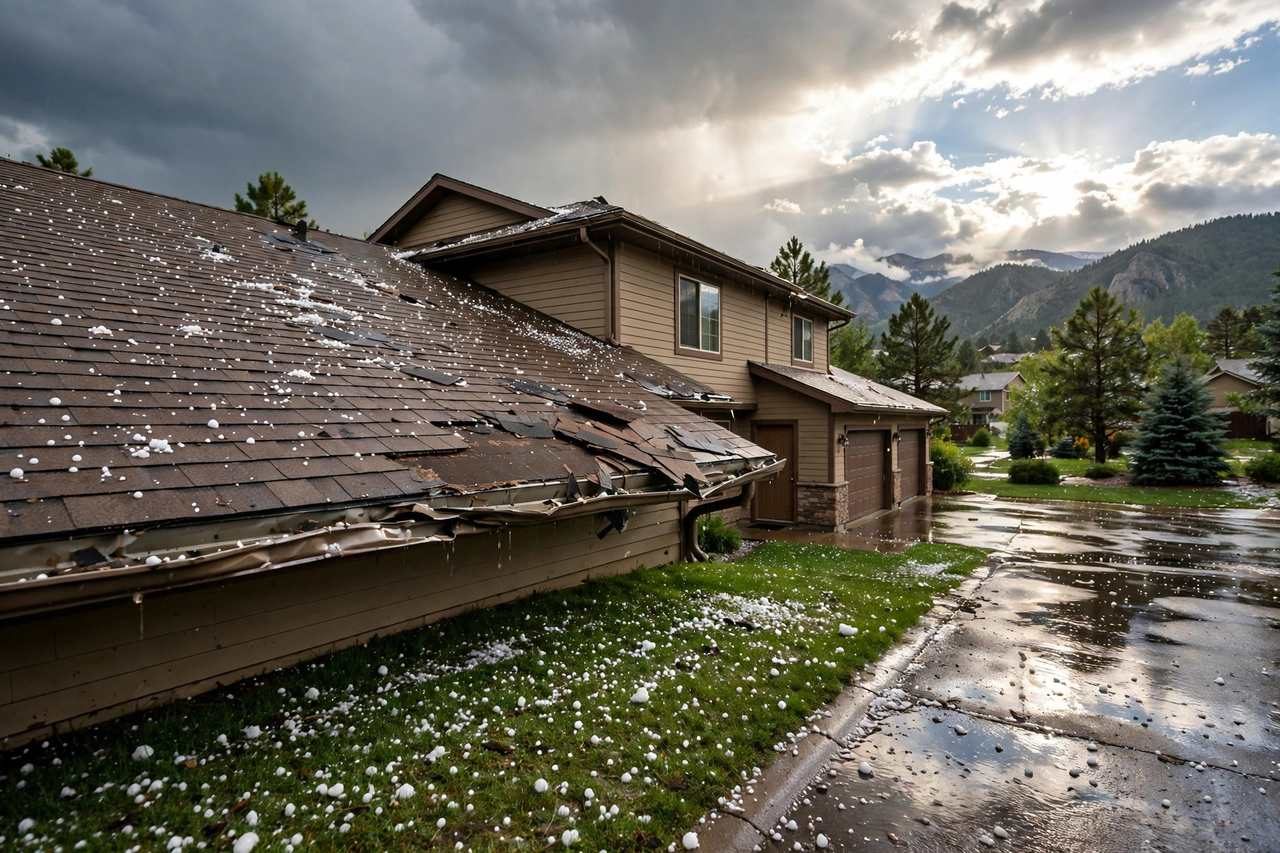
Wind does the first damage in most Lakewood storms. It lifts field shingles, tears ridge caps, and works on the slopes facing the foothills hardest. Wind-driven rain follows, finding every flashing gap and pushing water under shingles that looked fine in dry weather. Hail usually rides along with both. The inspection after a storm has to look for all three, because the repair has to cover all three.
Documentation is half the job after a storm. We photograph the damage before anything is moved, measure the affected slopes, and write a scope the adjuster can work from. Under Colorado law SB 12-038, a roofer may document damage, prepare a scope and meet the adjuster on site, but may not negotiate the claim or act as a public adjuster, and may not pay, waive or rebate any part of your deductible. Colorado has no strict matching statute, so whether a carrier must match discontinued shingles is a policy question, not a promise anyone can make. For the claim process itself, our guide to filing a storm damage claim in Lakewood walks through the steps.
Practical benefits
Why storm damage needs its own approach
A storm repair is not a normal repair. The damage is wider, the evidence matters more, and the clock runs faster.
Damage documented before it is touched
We photograph everything before any repair, because the adjuster needs to see what the storm did, not what the cleanup left. Lifted shingles, torn ridge caps, and water paths under the flashing all get recorded.
All three kinds of damage found
Wind, rain, and hail overlap in one storm, and a repair that re-lays the shingles but misses the flashing will leak in the next storm. We check the whole system, from ridge to eaves, not just the slope that looks worst.
A repair-or-replace answer with evidence
When lifting and granule loss are widespread, replacement is usually the honest call. When the damage is local, a repair buys real time. The inspection gives you that answer with photos, not a guess.
No storm-chaser promises
We do not promise claim outcomes, and we do not offer to cover deductibles: under SB 12-038, a roofer paid from insurance proceeds may not pay, waive or rebate any part of your deductible. A contractor who offers to is breaking the law.
How service works
How a storm damage repair runs
Five steps from the first walk after the storm to the permanent repair, with the claim record built along the way.
STEP 01
Storm inspection
We walk the roof and the attic side, looking for lifted shingles, torn ridge caps, water paths under flashing, and the hail bruising that usually rides along. Collateral damage to gutters, vents, and skylights gets the same attention as the shingles, because the claim covers the whole roof system.
Tools and methods
Tools and methods we use on storm damage
Camera and photo record
Photos come first on a storm job: the damage is recorded before anything is moved, and the record is what the adjuster works from when the claim is filed.
Moisture meter for wind-driven rain
Wind-driven rain soaks decking and attic framing where the eye cannot see it. The meter finds that damp before the permanent repair closes it up.
Pry bar for lifted courses
Lifted shingles and torn flashing come up without tearing the good material around them, so a wind repair stays a repair.
Nail gun, set for wind uplift
Repair shingles are nailed to the depth and pattern that holds them in the next wind event — and on slopes that already lifted once, the nailing gets a second look.
Chalk line
Repair courses are lined up with the existing roof, so the patch sheds water instead of catching it.
Tape measure
We measure the damaged area in square feet and the whole roof in squares, because the permit decision turns on those numbers.
Hook blade and utility knife
The repair edge is cut clean so the new shingles seat tight against the old courses, with no gap for the next rain to find.
Sealant gun for flashing details
Flashing details and pipe boots get sealant in the right bead, as part of the permanent repair, not as a substitute for one.
Magnet sweeper
The yard and driveway are swept for nails when the work is done, because a storm job should not leave hazards behind.
Leaf blower
The repair area and the gutters are blown clear of granules and debris, so the finished work drains the way it should.
Where this service fits
When storm damage repair is the right call
A storm just passed and the roof is open
After a storm, the first job is stopping the water: tarping the open roof, then an inspection that records lifting, bruising, and granule loss while the evidence is fresh. The permanent repair follows once the roof is dry and measured.
Wind lifted shingles on the foothills side
Downslope wind off the foothills lifts field shingles and tears ridge caps, and the design wind for Lakewood roofs is 100 Vasd / 130 Vult (IRC scope). If the loss is local and the deck is sound, a repair restores the roof. Ourguide to lifting shingles explains why it happens.
Rain found a flashing gap
Wind-driven rain finds every flashing gap and works water under shingles that looked fine in dry weather. The repair rebuilds the flashing detail, not just the shingle above it.
You need a claim record fast
Every rain after the storm washes the evidence away. Getting the inspection done within days hands the adjuster a record worth working from, and the permanent repair can wait until the roof is dry.
Local execution
Storm damage across Lakewood neighbourhoods
Storms do not hit Lakewood evenly. Slope, trees, exposure and house age all change what a storm does to a roof. Here is how storm damage usually looks, area by area.
Wind damage looks different by neighbourhood — the foothills edge takes the gusts, the tree streets take the limbs — and the response starts with stopping the water. If a tree is on the roof, our guide to tree damage emergencies covers the first hour. Our locations page lists all seven areas we cover.
Problems we solve
Storm problems we repair most often
After a Lakewood storm the damage comes mixed — wind, rain, and hail together — and the repair has to cover all of it. These are the four we see most.
Wind-lifted shingles and ridge caps
Downslope wind lifts field shingles and tears ridge caps, and every missing shingle is an open path for the next rain. A local repair restores the course if the deck is sound.
Flashing opened by wind-driven rain
Wind-driven rain finds every flashing gap and works water under shingles that looked fine in dry weather. The repair rebuilds the flashing detail, not just the shingle above it — and on the wide side of a chimney or any penetration over 30 inches, a cricket goes in to split the water.
Emergency tarping, then the permanent repair
When a storm opens the roof, the first job is stopping the water: a tarp over the opening, then a measured scope for the permanent repair once the roof is dry. A tarp is not a repair, and it is never the end of the job.
Water paths under lifted shingles
Wind lifts a shingle, rain follows the gap, and the leak shows up inside far from the lifted course. The repair traces the water path back to the entry point instead of patching the stain.
Need help?(720) 817-3348
A practical standard for every visit.
Clear planningPrepared arrivalsCareful workLocal follow-through
Experience in the details
A Lakewood roofer you can check
Wind and rain leave a roof open, so the first call should go to a roofer you can verify — ours is on the About page, registration and reviews included.
Where we work
One local team. A lot of ground covered.
Notes from local customers
What Lakewood Homeowners Say
Shortly after a horrible hail storm, Keith from Roof Authority LLC provided a free inspection of our roof and suggested replacement of the roof and gutters, as well as replacement of one window screen. He worked with the insurance company and ushered through the claims' submission. On the scheduled day, the crew replaced the entire roof and gutters in one day! After completion of the project, Keith inspected the job and discovered one missing shingle which he replaced the same day also. Overall, working with Roof Authority has been very positive. We have recommended Roof Authority, LLC to our friends. Thank you Keith!
We had several roofing contractors inspect our roof after a recent hail storm. Keith was the most professional and knowledgeable of them all. He worked well with our insurance company, was there for the insurance adjuster's visit to our home, and his friendly crew replaced our roof in one day! They did a thorough cleanup afterward. Keith also noticed a hail damaged gutter that needed replacing and took care of that also. He also replaced four hail damaged window screens at no charge. We would highly recommend Roof Authority LLC to anybody needing a hail damaged roof repaired or replaced!
Roof Authority, LLC (Keith Merritt) has done numerous roofing jobs for our family. I first met him over 15 years ago when he presented himself with integrity & enthusiasm while replacing a roof for my mother. That job was flawless, was done under budget and took less time than expected. It is because of that first experience that I have used Keith's expertise over and over again since. Following a bad hail storm in 2021, after 2 other roofers presented fancy quotes, Keith came, inspected our roof and said he'd make it happen with our insurance claim. He walked through the process with us, was there to do the heavy lifting and was onsite to supervise the roofers as they worked. While the roof was being replaced, Keith noticed a few other issues with our home that he'd forgotten to mention in his estimate, and took care of them without any additional charges. Keith and his crew are polite and modest and really do a job that lasts!
Stay off the roof and look from the ground first: lifted shingles, torn ridge caps, dents in gutters and downspouts, and granules in the gutters are the signs you can see safely. Then call us at (720) 817-3348 for an inspection. We photograph the damage while the evidence is fresh, tarp any opening that is letting water in, and give you a written scope for the adjuster.
That depends on your policy, the damage and your deductible. We document the damage, prepare a scope, meet the adjuster on site and submit a supplement for missed code-required items. We may not negotiate the claim or act as a public adjuster, and under SB 12-038 we may not pay, waive or rebate any part of your deductible.
Most policies want prompt notice, and many set a deadline, so waiting for the next storm to decide is the wrong move. The inspection and the photo record belong in the first few days, before rain washes the evidence away, and the claim should go in promptly after that.
It depends on how widespread the damage is. Local lifting and a few torn ridge caps are a repair. Widespread lifting across whole slopes, or a deck that is soft, usually means replacement is the honest call. Our inspection gives you that answer with photos, not a guess.
Keep exploring
Related Services
Your next step is waiting
Get your storm damage inspected and documented
When the roof is open, the first job is stopping the water, so call (720) 817-3348, Monday to Saturday 7:00 AM to 5:00 PM. We will tarp the opening, walk the roof, and write the scope the adjuster needs.
Start with the basics
Contact Roof Authority LLC
Has a storm just passed through, or are you still dealing with damage from the last one? Call Roof Authority LLC at (720) 817-3348. We are at 200 Union Blvd, Lakewood, CO 80228, and we answer the phone Monday to Saturday, 7:00 AM to 5:00 PM. Sunday we are closed.